
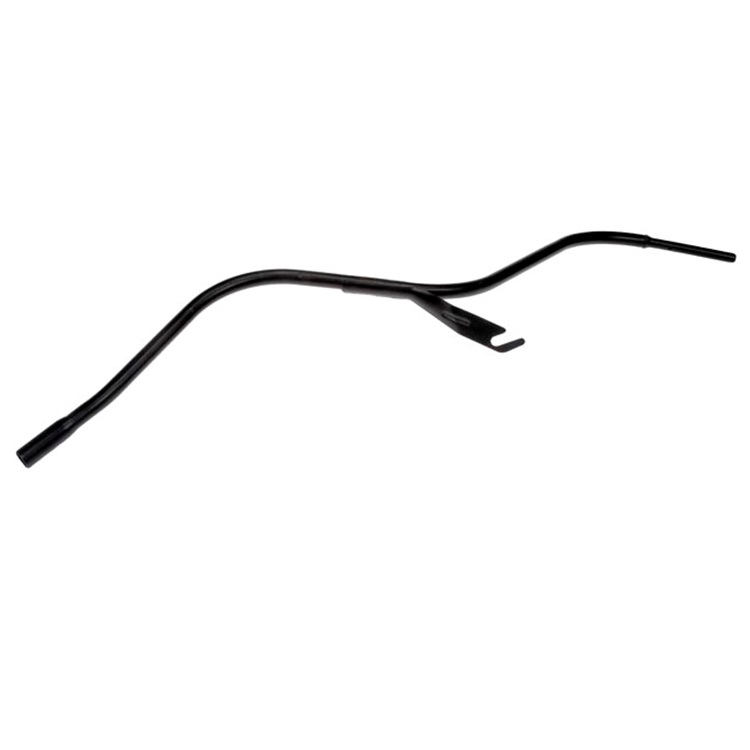
In a strategic move signaling its commitment to innovation and market leadership, a leading manufacturer specializing in automotive stainless steel bellows assemblies and metal pipe fittings has recently announced a significant transition from traditional copper piping to advanced flexible piping solutions. This transformation is poised to redefine industry standards, enhance product performance, and solidify the company’s position as a premier system service solution provider in the automotive sector.
**Driving Innovation in Automotive Metal Pipe Fittings**
The company, renowned for its expertise in manufacturing and developing automotive stainless steel bellows assemblies and metal pipe fittings, has continually invested in research and development to stay ahead of evolving industry demands. The recent adoption of flexible pipe technology aligns perfectly with its vision to lead the market by delivering superior quality components and comprehensive system solutions.
Flexible pipe technology, unlike conventional copper piping, offers several distinct advantages crucial to modern automotive applications. These include improved flexibility, enhanced durability, corrosion resistance, and ease of installation — all factors that contribute to better vehicle efficiency and longevity. By integrating this advanced piping solution, the company addresses the increasing complexity and customization requirements of contemporary automobile manufacturing.
**Why Move Beyond Copper Pipes?**
For decades, copper pipes have been widely used in automotive systems due to their excellent thermal conductivity and malleability. However, copper’s susceptibility to corrosion, weight considerations, and limitations in accommodating dynamic movements within vehicle assemblies have presented challenges. Flexible pipes, often constructed from stainless steel or composite materials, offer a resilient alternative that overcomes these issues.
Flexible pipes excel in absorbing vibrations and movements, an essential attribute in automotive environments where components are subject to constant mechanical stress and temperature fluctuations. This capability reduces the risk of leaks and failures caused by rigid connections. Additionally, their resistance to corrosion and chemical exposure ensures longer service life, translating into reduced maintenance costs and enhanced reliability for manufacturers and end users alike.
**Enhancing System Integration and Performance**
The transition to flexible pipe technology is not merely a product upgrade but a comprehensive solution enhancement that integrates seamlessly with the company’s core offerings — stainless steel bellows assemblies and metal pipe fittings. These components function synergistically to provide robust, high-performance fluid and gas transport systems within vehicles.
Stainless steel bellows, celebrated for their ability to accommodate thermal expansion and mechanical movement, pair naturally with flexible piping to form adaptive systems capable of meeting stringent automotive standards. The resulting assemblies maintain structural integrity under extreme conditions, ensuring optimal performance for critical applications such as exhaust systems, fuel lines, and air conditioning circuits.
By focusing on the combined development of flexible pipes and bellows assemblies, the company emphasizes a holistic approach that addresses both material innovation and system design. This strategy fosters enhanced customization, allowing OEMs and suppliers to tailor solutions that meet specific vehicle architectures and regulatory requirements.
**Commitment to Quality and Sustainability**
Quality management and sustainability are cornerstones of the company’s operational philosophy. The introduction of flexible piping complements these commitments by promoting lightweight vehicle design and improving fuel efficiency, thereby contributing to reduced environmental impact. Lighter piping systems decrease overall vehicle weight, assisting manufacturers in meeting increasingly stringent emissions and fuel economy targets.
Moreover, the extended durability and corrosion resistance of flexible pipes reduce the frequency of part replacements, minimizing waste and lifecycle costs. This aligns with the automotive industry’s broader push towards greener manufacturing practices and circular economy principles.
**Looking Ahead: Market Leadership and Growth Opportunities**
As the automotive landscape rapidly evolves, driven by electrification, autonomous driving, and advanced manufacturing technologies, the demand for innovative fluid transport solutions continues to rise. The company’s move to flexible pipe technology positions it strategically to capture growing market segments while reinforcing its reputation as a leading manufacturer and system service provider.
Future development plans include expanding the portfolio of flexible pipes to accommodate a wider range of diameters, pressure ratings, and materials tailored for next-generation vehicles. The company also aims to leverage digital technologies such as smart sensors and IoT integration within piping assemblies to enable predictive maintenance and real-time monitoring, further enhancing product value.
Collaboration with automotive OEMs and tier suppliers remains a critical focus to ensure that solutions address practical challenges and deliver measurable benefits. Emphasis on research partnerships and pilot projects underscores the company’s proactive stance in shaping the future of automotive fluid management systems.
**Conclusion**
In summary, the shift from copper pipe to flexible pipe technology marks a pivotal advancement for a company dedicated to excellence in automotive stainless steel bellows fittings and assemblies. By embracing innovation and holistic system integration, the company not only responds effectively to industry challenges but also sets new benchmarks for performance, reliability, and sustainability. As it continues to develop cutting-edge solutions, it is well-positioned to maintain its leadership in the competitive automotive market and contribute meaningfully to the sector’s ongoing transformation.